
Best Flowering Shrubs North Texas: Texas Sage Wins | 2026
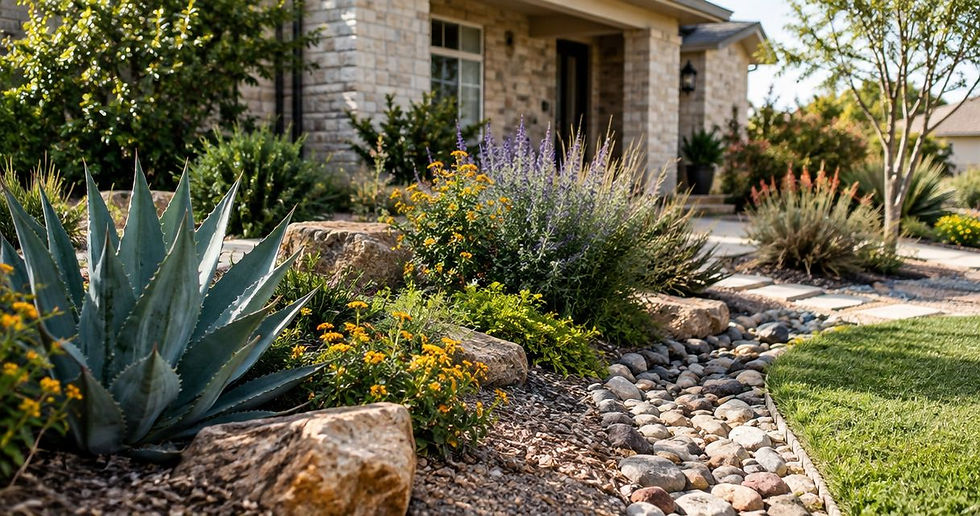
Best overall for sunny, well-drained North Texas beds: Texas sage. Best for compact flowering borders: autumn sage. Best for a flowering hedge: abelia. Perfectgreendfw handles landscape design, installation, sod, and property maintenance, so your shrub choices can fit the whole yard rather than become another mowing obstacle.
TL;DR
The best flowering shrubs North Texas homeowners can choose depend on sunlight, drainage, and mature size.
Texas sage is the default for sunny, well-drained beds; autumn sage suits smaller flowering borders.
Choose oakleaf hydrangea for protected partial shade, not an exposed west-facing bed.
Perfectgreendfw provides landscape design and installation for North Dallas homeowners, including Frisco.
Your 2026 planting plan should start with the site, not the flower color. If you want help choosing plants and coordinating installation with lawn work, Perfectgreendfw provides residential and commercial landscaping services in the North Dallas suburbs, including Frisco.
Why this matters
A shrub can survive North Texas weather and still be wrong for your property. Standing water, reflected driveway heat, deep shade, and limited bed width each change the choice.
Buying a small plant does not mean buying a small-growing shrub. Match the mature plant to the space, then decide which flowers you want. That order prevents repeated pruning just to keep a walkway open.
For a 2026 landscape refresh, choose shrubs by exposure and drainage before choosing by bloom color. Sod and shrub beds also need separate attention: a watering schedule that suits new turf does not automatically suit an established planting bed.
What makes the best flowering shrubs for North Texas?
These criteria determine the ranking:
Sunlight fit: Match the plant to the light reaching the bed, including afternoon exposure.
Drainage fit: Distinguish soil that stays moist from soil that holds standing water. They are not the same condition.
Mature size: Leave room for the named cultivar, not just the container you bring home.
Flowering role: Decide whether you want repeat color, an early-season display, or a flowering hedge.
Upkeep: Choose a natural shape you can keep without constant shearing.
Winter appearance: Decide whether the bed needs evergreen foliage or can accommodate bare branches.
Full sun generally means at least 6 hours of direct sunlight per day. Check the actual bed rather than assuming that every part of a south-facing property receives the same exposure.
Best flowering shrubs at a glance
Rank | Shrub | Best for | Standout feature | Key limitation |
1 | Texas sage | Sunny, well-drained beds | Silvery foliage and purple flowering flushes | Poor fit for wet soil |
2 | Autumn sage | Compact flowering borders | Repeat flowering and smaller scale | Needs drainage and occasional shaping |
3 | Abelia | Flowering hedges | Arching growth and an extended flowering season | Cultivar size and winter foliage vary |
4 | Oakleaf hydrangea | Protected partial shade | White flower clusters and bold leaves | Needs moisture and protection from harsh exposure |
5 | Flowering quince | Early-season accent planting | Flowers before or as leaves emerge | Brief flowering season; many varieties have thorns |
The table ranks distinct jobs, not interchangeable plants. Oakleaf hydrangea belongs above Texas sage for a protected, partially shaded bed; Texas sage belongs above oakleaf hydrangea for an exposed, well-drained sunny bed.
1. Texas sage: best flowering shrub for sunny, dry beds
Texas sage, Leucophyllum frutescens, is a woody shrub with silvery foliage and purple flowers. It suits sunny sites with good drainage and tolerates dry conditions once established. It is not the culinary sage used in cooking.
Standard forms commonly reach about 4–8 feet tall, while selected cultivars stay smaller. Confirm the cultivar's mature width before placing Texas sage beside a sidewalk or beneath a window.
Texas sage pros:
Tolerates heat and dry conditions after establishment.
Provides foliage interest between flowering periods.
Works as a substantial sunny-bed shrub.
Offers purple flowering flushes rather than foliage alone.
Texas sage cons:
Poor drainage can cause root problems.
Flowering occurs in flushes, not as a continuous display.
Frequent shearing changes its natural form and removes flowering growth.
Best for: Sunny beds where water drains away and there is room for a broad shrub.
For your 2026 plan, avoid placing Texas sage in a low spot simply because that area needs filling. Fix the drainage or choose a plant suited to the moisture conditions.
Verdict: Buy for a sunny, well-drained bed; skip for persistently wet soil.
2. Autumn sage: best flowering shrub for compact borders
Autumn sage, Salvia greggii, is a small woody perennial or subshrub that produces flowers through much of the growing season. Flowers attract hummingbirds, and available cultivars offer different colors. Despite its common name, its flowering is not limited to autumn.
Many forms grow around 2–3 feet tall, making autumn sage easier to place near paths than a full-size Texas sage. Allow for its mature spread and select a location with drainage rather than a basin that collects lawn runoff.
Autumn sage pros:
Fits smaller beds and border planting.
Provides repeat flowering rather than one brief seasonal display.
Attracts hummingbirds.
Tolerates dry conditions after establishment.
Autumn sage cons:
Wet soil is a poor match.
Older plants need shaping to manage woody growth.
Flower color and mature habit depend on the cultivar.
Best for: Smaller sunny borders where you want flowers without a large hedge.
Use autumn sage where its loose shape is acceptable. A planting that must look like a tightly clipped box hedge needs a different plant and a different maintenance plan.
Verdict: Buy for compact flowering borders; skip where standing water collects.
3. Abelia: best flowering shrub for an informal hedge
Abelia, commonly sold as Abelia × grandiflora and named cultivars, combines arching branches with small tubular flowers. It works where you want a flowering shrub to form part of the bed's structure rather than serve only as a seasonal accent.
Cultivars differ substantially in size, foliage color, and growth habit. Some retain more foliage through mild winters than others; cold weather can reduce that coverage. Do not treat every abelia as the same evergreen screening plant.
Abelia pros:
Offers an extended flowering season.
Works in informal hedges and grouped plantings.
Provides cultivar choices for different bed sizes.
Accepts full sun or partial shade, with flowering favored by more sun.
Abelia cons:
Winter foliage is not equally dependable across cultivars and conditions.
A large-growing cultivar can outgrow a narrow foundation bed.
Repeated hard shearing sacrifices its arching form and flowers.
Best for: An informal flowering hedge where a softer outline is welcome.
For a 2026 installation, put the exact cultivar name in the planting plan. A quote that lists only abelia leaves an important size decision unresolved.
Verdict: Buy for an informal flowering hedge; hold until the cultivar and mature dimensions are confirmed.
4. Oakleaf hydrangea: best flowering shrub for protected shade
Oakleaf hydrangea, Hydrangea quercifolia, produces white flower clusters and large, lobed leaves. Its foliage also adds seasonal interest, giving the plant a role beyond its flowering period.
Standard forms commonly reach 6–8 feet tall, although compact cultivars are available. In North Texas, give oakleaf hydrangea a protected location with partial shade, consistent moisture, and drainage. An exposed bed beside heat-reflecting pavement is the wrong starting point.
Oakleaf hydrangea pros:
Adds flowering interest to a partially shaded bed.
Provides distinctive leaf texture.
Offers seasonal foliage interest.
Has compact cultivar options for smaller spaces.
Oakleaf hydrangea cons:
Needs more attention to moisture than drought-adapted shrubs.
Harsh afternoon exposure can stress the plant.
Pruning at the wrong time removes flower buds formed on older wood.
Best for: Protected beds with partial shade and room for the selected cultivar.
Avoid buying oakleaf hydrangea solely because you want large flowers. The moisture and exposure requirements must fit your property before the flower display matters.
Verdict: Buy for protected partial shade; skip for an exposed, dry west-facing bed.
5. Flowering quince: best flowering shrub for early-season color
Flowering quince, Chaenomeles species and hybrids, blooms in late winter or early spring, often before the shrub is fully leafed out. It adds color when many other flowering shrubs are not yet active.
Flowering quince is deciduous, and many varieties have thorns. Its early flowers make it an accent plant, not a substitute for a hedge that must provide foliage and flowers throughout the growing season.
Flowering quince pros:
Provides an early-season flower display.
Offers several flower colors through named cultivars.
Works as a distinct seasonal accent.
Flowers on bare or lightly leafed branches for a noticeable display.
Flowering quince cons:
Many varieties have thorns, which complicates placement beside paths.
Some forms sucker and need containment.
The main flower display is brief compared with repeat-flowering shrubs.
Best for: An early-season accent away from busy walking routes.
If thorns are a concern, confirm the characteristics of the exact cultivar. Do not assume that a photograph of flowers tells you how the mature shrub will behave.
Verdict: Buy for early-season color; skip thorny varieties beside high-use paths.
How this ranking works
The ranking follows sunlight, drainage, mature size, flowering role, upkeep, and winter appearance. Texas sage takes the default sunny-bed slot; autumn sage takes the compact-border slot. The remaining shrubs serve different needs rather than competing for the same space.
The botanical characteristics and size ranges align with established plant references, including Texas A&M AgriLife horticultural resources and Missouri Botanical Garden Plant Finder profiles. For 2026 purchasing decisions, check the named cultivar's plant information; species-level dimensions do not describe every selection.
Match the shrub to the property before installation
A useful planting plan answers these questions in order:
Check sunlight: Identify morning sun, afternoon sun, and shade from buildings or trees.
Check drainage: Look for standing water after rain or irrigation, especially beside downspouts.
Confirm size: Compare mature height and width with windows, paths, utilities, and lawn edges.
Plan upkeep: Decide who will water new plants, prune them, and maintain the surrounding bed.
Choose the plant after checking the bed, not before.
Walk the property with the whole job in mind. If you are replacing sod as well as planting shrubs, identify bed edges and watering needs before installation. Keep shrubs far enough from turf that mowing and edging remain practical at maturity.
Perfectgreendfw is a fit for North Dallas homeowners who want landscape design, installation, sod, and ongoing property maintenance. Weekly mowing is a separate task from establishing new shrubs; ask the quote to distinguish lawn work from bed preparation, planting, and ongoing plant care.
What to include in your quote request
Send the property location, photographs of the beds, the purpose of the planting, and any known drainage problems. Explain whether the project includes new beds, replacement shrubs, sod, or continued property maintenance.
Ask for an itemized scope covering plant selection, removal of existing material where needed, soil preparation, installation, and follow-up responsibilities. Confirm what is included rather than assuming every task falls under landscape installation.
Request a property-specific landscaping quote
Discuss shrub selection, landscape installation, sod, and property maintenance for your property.
Which flowering shrub should you choose?
Choose Texas sage as the default for a sunny North Texas bed with good drainage. Choose autumn sage when the same general conditions apply but the bed needs a smaller flowering plant.
Abelia suits an informal hedge. Oakleaf hydrangea suits protected partial shade with dependable moisture. Flowering quince suits a specific early-season accent.
For your 2026 project, choose the job first and the shrub second. A shorter plant list matched to actual conditions is more useful than a long list of flowers that do not fit your yard.
FAQ
What's the best flowering shrub for a sunny North Texas yard?
Texas sage is a strong default for a sunny North Texas bed with good drainage. It tolerates dry conditions once established, but it is a poor choice for soil that remains wet.
What's a good small flowering shrub for a Frisco front yard?
Autumn sage suits compact flowering borders in Frisco when the bed has sun and good drainage. Confirm the cultivar's mature spread so the plant does not crowd a walkway.
Is Texas sage better than abelia?
Texas sage is the better fit for a sunny, dry, well-drained planting; abelia is the better fit for an informal flowering hedge. Choose by the bed's conditions and the role you need the shrub to fill.
Can oakleaf hydrangea grow in North Texas?
Oakleaf hydrangea can grow in North Texas in protected partial shade with moisture and good drainage. Avoid exposed beds that receive harsh afternoon heat.
Which flowering shrub gives early-season color?
Flowering quince provides late-winter or early-spring flowers. Many varieties have thorns, so confirm the cultivar before planting beside a walkway.
Do drought-tolerant shrubs need watering after planting?
Newly planted drought-tolerant shrubs need establishment watering. Adjust watering to the plant, soil moisture, weather, and drainage rather than applying an established lawn schedule automatically.
How do I request a landscaping quote for flowering shrubs?
Contact Perfectgreendfw with your property location, bed photographs, and the work you want included. Ask for a property-specific scope covering design, preparation, installation, and maintenance responsibilities.
One last thing
Pruning can remove the flowers you bought a shrub to enjoy. Oakleaf hydrangea and flowering quince flower on older growth, so routine hedge trimming at the wrong time works against the planting's purpose. Put pruning instructions beside the plant names in your maintenance plan.


Comments