
Best Water Wise Landscaping Ideas Texas: 2026 Picks
Best overall: a site-matched landscape redesign that groups plants by water needs. Perfect Green Landscapes handles landscape design, installation, sod, and property maintenance in Frisco; for your 2026 yard plan, drought-adapted planting wins for sunny beds, while organic mulch is the first improvement to consider for existing beds.
TL;DR
The best water wise landscaping ideas Texas homeowners can use start with matching plants and lawn areas to the site.
Perfect Green Landscapes offers Frisco homeowners landscape design, installation, sod, and property maintenance.
Choose drought-adapted plants for sunny beds; use organic mulch to protect exposed soil.
Keep useful lawn, separate watering needs, and plan establishment care before installation.
Why this matters
A water-wise yard is not simply a yard with less grass. Plants, soil, drainage, and irrigation need to work together. Replacing lawn with plants that dislike your growing conditions just creates a different maintenance problem.
For North Dallas homeowners planning work in 2026, start with the places that cause trouble: unused turf, exposed soil, crowded beds, and plants sharing irrigation despite different needs. Property managers should also account for pedestrian routes, visibility, and maintenance access. Change the layout before buying replacement plants.
What makes the best water-wise landscape
Use these criteria to judge each idea before deciding what belongs in your yard:
Site fit: Match plants and turf to sunlight, soil, drainage, and mature size.
Water separation: Group plants with similar watering needs instead of treating every bed alike.
Useful space: Keep lawn where you use it; give unused areas a clear purpose.
Establishment care: Account for watering new plants, trees, and sod while roots develop.
Maintenance access: Leave room for mowing, pruning, irrigation repairs, and routine cleanup.
Long-term upkeep: Include mulch renewal, emitter checks, and plant care in the plan.
A practical 2026 project should address the biggest layout problem first. You do not need to replace every part of a functioning landscape.
Water-wise landscaping ideas at a glance
Rank and idea | Best for | Standout feature | Key limitation |
1. Site-matched landscape redesign | Whole-yard coordination | Organizes plants, turf, and watering needs together | Requires planning before installation |
2. Drought-adapted planting | Sunny ornamental beds | Matches plant selection to heat and site conditions | New plants still need establishment watering |
3. Organic mulch | Established planting beds | Covers soil and reduces surface evaporation | Needs replenishment and correct placement |
4. Drip irrigation | Targeted bed watering | Applies water near plant roots | Emitters need inspection and maintenance |
5. A smaller, purposeful lawn | Play areas and usable open space | Keeps turf where it serves a purpose | Remaining turf still needs regular care |
6. Permeable paths | Frequently traveled routes | Replaces worn planting areas with usable access | Performance depends on soil and construction |
7. Site-matched shade trees | Long-term shade | Changes sun exposure as the canopy develops | Needs space and establishment care |
1. Site-matched redesign: best for whole-yard coordination
A site-matched redesign treats the yard as one working layout. Place plants with similar water needs together, keep useful lawn, and separate beds from turf watering where the irrigation system allows. This avoids building a new planting plan around an old watering pattern.
Perfect Green Landscapes provides design, installation, sod, and property maintenance. Ask for a property-specific proposal that connects those services to the conditions in your yard, rather than requesting an assortment of plants without a layout.
Site-matched redesign pros:
Connects plant selection with sunlight and drainage.
Gives each lawn or bed area a defined purpose.
Establishes maintenance access before installation.
Site-matched redesign cons:
Requires decisions about existing plants and turf.
Irrigation changes need their own defined scope.
Best for: Homeowners or property managers changing several parts of a property.
Verdict: Choose a coordinated redesign when the yard's layout is the problem.
2. Drought-adapted planting: best for sunny ornamental beds
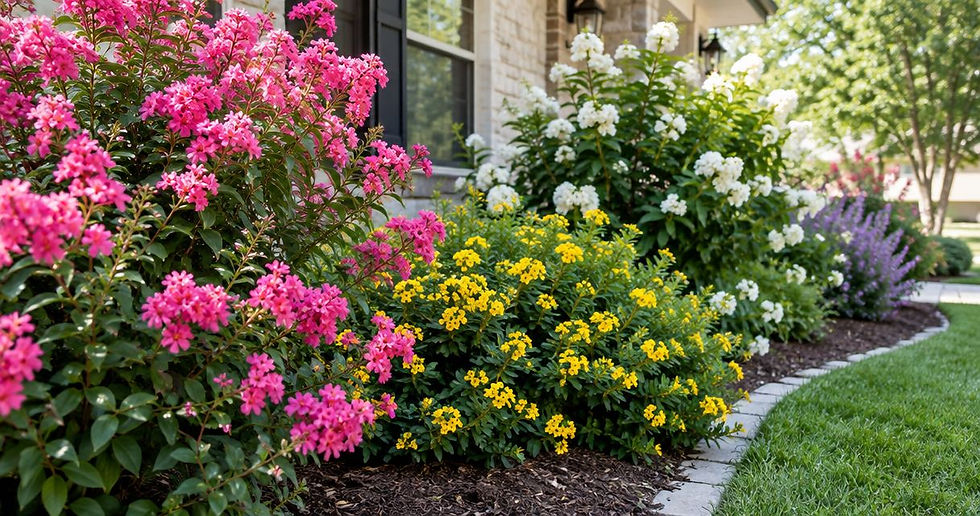
Drought-adapted plants are a better starting point than thirsty ornamentals for exposed beds, but the label alone is not enough. Match each selection to drainage, sunlight, and available space. Texas sage, for example, needs a sunny site with good drainage rather than a persistently wet planting pocket.
Use the guide to drought-tolerant plants for Frisco yards to narrow your choices. Then check mature dimensions so the planting does not depend on constant trimming to fit.
Drought-adapted planting pros:
Makes site suitability part of plant selection.
Offers alternatives to maintaining unused turf.
Can combine shrubs and flowering perennials in one bed.
Drought-adapted planting cons:
Drought tolerance does not eliminate establishment watering.
Poor drainage can rule out otherwise suitable selections.
Best for: Sunny beds that need a new planting plan.
Verdict: Choose plants for the actual bed, not just a drought-tolerant label.
3. Organic mulch: best for improving established beds
Organic mulch covers exposed soil, reduces surface evaporation, and helps suppress weeds. A layer about 2–3 inches deep is a common landscape recommendation; check the existing depth before adding more. Keep mulch away from trunks and plant crowns instead of piling it against them.
Mulch improves the surface of a bed, but it does not repair drainage or make an unsuitable plant suitable. Remove weeds and inspect watering coverage before spreading a fresh layer.
Organic mulch pros:
Protects soil without replacing established plants.
Reduces evaporation from the soil surface.
Breaks down into organic material over time.
Organic mulch cons:
Requires replenishment as it decomposes.
Excess depth or contact with stems creates problems.
Best for: Established beds with exposed soil.
Verdict: Choose organic mulch when the planting works but the soil needs cover.
4. Drip irrigation: best for targeted bed watering
Drip irrigation applies water near plant roots rather than spraying across an entire bed. Its usefulness depends on emitter placement, water delivery, and the plants being served. A line running through a bed is not proof that every root zone receives adequate water.
For a 2026 irrigation update, ask the installer to explain coverage, filtration, pressure requirements, and how the system will be checked. Confirm whether irrigation work is included in the landscape proposal or requires a separate contractor.
Drip irrigation pros:
Directs water toward planted areas.
Avoids overhead spray on nearby pavement.
Supports watering beds separately from turf.
Drip irrigation cons:
Clogged or damaged emitters need attention.
Coverage must change as planting arrangements change.
Best for: Planted beds that need targeted watering.
Verdict: Choose drip irrigation only with a clear inspection and maintenance plan.
5. A smaller lawn: best for preserving useful outdoor space
Keep lawn where you use it for play, pets, or open space. Consider converting awkward corners and unused strips into suitable beds instead of treating every remaining patch as necessary turf. Smaller lawn area does not excuse choosing grass that struggles in the remaining space.
Bermudagrass generally needs at least 6 hours of direct sunlight daily for good performance. Shaded sites need a different evaluation. New sod also needs establishment watering, even when the finished landscape is intended to use water more carefully.
A smaller lawn pros:
Preserves the parts of the yard you actually use.
Removes difficult mowing corners from the layout.
Makes turf selection a deliberate decision.
A smaller lawn cons:
Remaining grass still needs mowing and watering.
Replacement beds introduce their own upkeep.
Best for: Homes that need some lawn, but not lawn everywhere.
Verdict: Keep functional turf and redesign the unused edges.
6. Permeable paths: best for frequently traveled routes
A defined path gives foot traffic somewhere to go instead of repeatedly wearing down turf or compacting a planting bed. Permeable construction allows water through the surface, but the underlying soil, base, and grading determine how the complete installation handles it.
Treat pathways as a design option to discuss, not an assumed service inclusion. Ask the contractor to identify who handles construction and how the route will connect to the rest of the landscape.
Permeable paths pros:
Give repeated foot traffic a defined route.
Replace turf that serves mainly as a walkway.
Provide access for routine property maintenance.
Permeable paths cons:
Surface permeability does not solve every drainage problem.
Base preparation and edge maintenance matter.
Best for: Side yards and other frequently traveled areas.
Verdict: Choose a path where people already walk, not as decoration alone.
7. Site-matched shade trees: best for long-term shade
A well-placed tree changes the conditions beneath its canopy as it grows. Choose the planting location around mature spread, buildings, utilities, and the plants below it. A tree that fits today can outgrow its space later.
Shade is a long-term design decision, not an immediate substitute for watering. Newly planted trees need establishment care, and the lawn or beds beneath them must suit the light conditions as the canopy develops.
Site-matched shade trees pros:
Create shade as the canopy grows.
Add structure to the landscape layout.
Support a planting plan built around changing light.
Site-matched shade trees cons:
Need sufficient space above and below ground.
Require establishment watering and ongoing care.
Best for: Properties with room for a mature canopy.
Verdict: Choose the tree and its location together.
How these ideas rank
The ranking puts layout first because plant selection, watering, and upkeep depend on it. Drought-adapted plants and mulch follow because they address planting suitability and exposed soil. Irrigation, lawn reduction, paths, and trees then serve distinct property needs.
This is a decision guide, not a claim that every yard needs all of these changes. The best 2026 project is the one that fixes your property's actual mismatch.
What to include in a property-specific quote
Give the contractor photographs, the areas you want changed, and a short description of recurring problems. Note wet spots, shaded turf, unused lawn, and beds that demand repeated replacement. A soil test can also inform planting decisions; Texas A&M AgriLife Extension's routine lawn and garden sampling guidance uses the upper 6 inches of soil, with the laboratory's instructions controlling collection.
Ask for a scope organized around these stages:
Site review: Identify sunlight, drainage concerns, existing plants, and intended use.
Landscape design: Define bed boundaries, plant placement, and retained lawn.
Installation: Specify removals, preparation, planting, sod, and mulch where needed.
Upkeep: Clarify establishment watering responsibilities and ongoing maintenance.
These stages separate what gets built from what needs care afterward. Ask the proposal to identify irrigation work explicitly rather than assuming it comes with planting.
Define upkeep responsibilities before approving the installation scope.
Perfect Green Landscapes fits Frisco homeowners who want landscape design, installation, sod, and ongoing property maintenance. Request a property-specific quote that separates the work to install from the work to maintain.
Request a property-specific landscape quote
Describe your beds, lawn, and maintenance needs so the requested scope matches your property.
Which water-wise landscaping idea should you choose?
Choose a site-matched redesign if several areas need work. Choose mulch if established beds mainly need soil cover. Choose drought-adapted planting if the existing plants do not suit the site.
For your 2026 plan, keep useful lawn and improve the weakest parts first. Do not replace a functioning landscape simply to make it look water-wise.
FAQ
What's the best water-wise landscaping idea for a Texas yard?
A site-matched redesign is the best overall starting point because it connects plant choice, lawn use, and watering needs. For an established bed with suitable plants, organic mulch is a more focused improvement.
Does drought-tolerant landscaping need watering?
Yes, drought-tolerant landscaping still needs watering, especially while new plants establish roots. Watering requirements depend on the plant, soil, weather, and root development.
Should I remove all my grass to save water?
No, keep grass where it serves a useful purpose and evaluate unused areas separately. Select turf for the site's sunlight and include establishment care when installing new sod.
Is mulch better than gravel around plants?
Organic mulch is the better fit when you want soil cover that also breaks down into organic material. Gravel serves different design purposes and does not correct poor drainage or unsuitable plant selection.
Is drip irrigation better than sprinklers for planting beds?
Drip irrigation is better suited to targeted root-zone watering in planted beds. It still needs correct emitter placement, filtration, inspection, and adjustments as the planting changes.
Can Perfect Green Landscapes help with a water-wise yard in Frisco?
Perfect Green Landscapes provides landscape design, installation, sod, and property maintenance in Frisco. Request a property-specific quote and ask which water-wise design changes and irrigation-related tasks are included.
What should I ask for in a 2026 landscaping quote?
Ask for an itemized scope covering site review, design, removals, preparation, planting, sod where needed, and upkeep responsibilities. Have irrigation work and establishment watering addressed explicitly.
One last thing
A drought-tolerant plant and a newly planted drought-tolerant plant have different care needs. Before installation begins, ask who will monitor watering while roots establish. A water-wise design still needs a workable handoff from installation to routine maintenance.


Comments