
Best Drought Tolerant Plants Frisco TX: 2026 Picks
Best overall: autumn sage. Best for a dry, sunny screen: Texas sage. Best for a low border: blackfoot daisy. These are the best drought tolerant plants for Frisco, TX yards when you match each plant to its sun, drainage and available space. Perfect Green Landscapes handles landscape design, installation and upkeep for Frisco homeowners and property managers who want the planting plan carried through to maintenance.
TL;DR
Autumn sage is the best overall drought-tolerant plant for a sunny Frisco planting bed.
Texas sage suits a sunny screen; blackfoot daisy suits a low border with good drainage.
For the best drought tolerant plants Frisco TX yards can support, check sun, drainage and space before planting.
New drought-tolerant plants still need watering while their roots establish.
Why this matters for a Frisco yard
A plant's drought tolerance describes how it performs once established, not what it needs on installation day. A new planting can struggle if you put it in a dry bed and skip establishment watering. The opposite problem matters too: a plant that tolerates drought can fail where water collects around its roots.
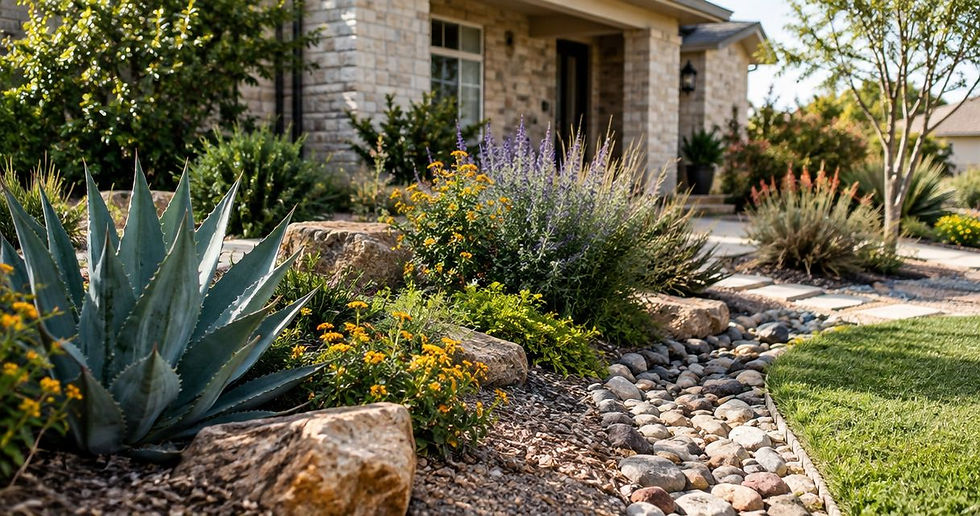
For a Frisco yard in 2026, choose the planting area before choosing the plant. Walk the property and check sun exposure, drainage, room to grow and water access. A bed beside a driveway, an open lawn edge and a spot beneath a tree do not offer the same conditions. Use the plant list below as a match for a specific place, not a shopping list for every bed.
Choose plants for the conditions in each bed, not for the yard as a whole.
Perfect Green Landscapes offers drought-tolerant landscape design as part of its residential and commercial landscaping work. If you also need sod or ongoing property maintenance, include those needs when you request a property-specific quote; a planting bed and a lawn require different upkeep.
What makes the best drought-tolerant plants for Frisco?
Use these criteria to judge the 2026 picks before looking at the ranking:
Sun fit: Full sun generally means at least 6 hours of direct sunlight a day. Check the actual bed rather than assuming the whole yard gets the same exposure.
Drainage: Drought tolerance is not tolerance for constantly wet roots. Watch where water stands after rain, especially before planting a species that needs sharp drainage.
Space: Allow for a plant's mature form. A shrub used as a screen and a compact edging plant solve different problems.
Establishment care: Plan how you will water new plants while their roots grow. Low-water planting does not mean no watering.
Maintenance: Decide whether you want a shaped shrub, a flowering perennial or a grass that needs seasonal cutting back. Pick the work you will actually keep up with.
These are selection criteria, not a promise that any plant will thrive in every Frisco bed. Drainage and sun can change across one property, so check each location before installation.
Best drought-tolerant plants for Frisco, TX: at a glance
Plant | Best for | Standout feature | Key limitation |
Autumn sage | Sunny flowering beds | Flowers and compact, shrub-like growth | Performs poorly in persistently wet soil |
Texas sage | Sunny screens | Dense, woody growth | Needs room and good drainage |
Blackfoot daisy | Low borders | Low growth and white flowers | Dislikes wet, heavy soil |
Red yucca | Structural accents | Upright flower stalks and arching leaves | Sharp leaf tips affect placement |
Little bluestem | Upright grass texture | Vertical form and seasonal color | Needs sun and space for its form |
Gulf muhly | Soft fall color | Airy pink fall seed heads | Less useful where a year-round screen is needed |
The table separates jobs that are easy to confuse. Texas sage is a screening shrub; red yucca is an accent. Neither replaces the low edge that blackfoot daisy provides. In 2026, start with the job your planting bed needs done, then narrow the choice by site conditions.
1. Autumn sage: best drought-tolerant plant for sunny flowering beds
Autumn sage, Salvia greggii, is the best overall choice here for a sunny bed that needs flowers without becoming a tall screen. It is a flowering perennial with a shrub-like shape and attracts pollinators. Give it drainage and enough room for its natural form rather than squeezing it against a path.
Autumn sage pros:
Provides flowers in a planting bed where you want more than foliage.
Fits a different role from a large screening shrub.
Works well as part of a mixed, sunny planting plan.
Autumn sage cons:
Persistently wet soil is a poor fit.
It needs attention during establishment and periodic trimming to manage its shape.
Best for: A sunny bed where you want flowering plants, not a hedge. Check the bed after rain before installing it; drainage matters as much as the hours of sun. If that spot stays wet, solve the drainage issue or choose another location rather than calling the planting drought-tolerant and hoping for the best.
Verdict: Buy for a sunny, well-drained flowering bed. Hold if the bed stays wet.
2. Texas sage: best drought-tolerant shrub for a sunny screen
Texas sage, Leucophyllum frutescens, earns the screening spot because it is a woody shrub with dense growth and a strong preference for sun and drainage. It belongs where a shrub has room to develop. It does not belong in a narrow strip that demands constant cutting to stay out of the walkway.
Texas sage pros:
Gives a sunny planting bed more height than a low perennial.
Offers a clear role when you need a shrub-based screen.
Pairs with lower plants without asking them to do the screening work.
Texas sage cons:
Poor drainage can undermine the planting.
Its eventual size makes tight foundation beds a poor match.
Best for: An open, sunny screening area with enough space for a shrub. Decide where the screen should start and end before planting. If you need a neat low border instead, blackfoot daisy is the better fit; if you need only a single accent, consider red yucca.
Verdict: Buy for a sunny screen with room to grow. Skip for cramped or persistently wet beds.
3. Blackfoot daisy: best drought-tolerant plant for a low border
Blackfoot daisy, Melampodium leucanthum, keeps a planting scheme low and brings white flowers to its edge. Use it where a taller shrub would block a path or look out of scale. Its low form makes placement straightforward, but its need for drainage is not optional.
Blackfoot daisy pros:
Defines a border without turning it into a screen.
Adds flowers to a low planting area.
Leaves taller plants visible behind it.
Blackfoot daisy cons:
Wet, heavy ground is a poor planting site.
It will not provide privacy or substantial height.
Best for: A sunny border where the soil drains well and you want a low plant in front of larger ones. Do not treat a soggy lawn edge as an easy place to install it. Check how water moves through that strip first.
Verdict: Buy for a low, well-drained border. Hold until drainage is addressed in a wet one.
4. Red yucca: best drought-tolerant plant for a structural accent
Red yucca, Hesperaloe parviflora, is not a true yucca. Its arching leaves and tall flower stalks give a bed a distinct focal point without asking a shrub to fill that role. It suits a sunny location where you can leave space around the plant and see its full shape.
Red yucca pros:
Creates a visible accent among lower or softer-textured plants.
Adds vertical interest when its flower stalks appear.
Has a different form from the flowering shrubs and grasses on this list.
Red yucca cons:
Leaf tips make placement close to walkways a practical concern.
A single accent plant does not provide the coverage of a screen or border.
Best for: A sunny bed that needs a focal point, away from places where people brush against the leaves. Put the accent where it helps the overall layout, not in the middle of a path or where a continuous hedge is the real goal.
Verdict: Buy as a spaced structural accent. Skip as a substitute for a privacy screen.
5. Little bluestem: best drought-tolerant plant for upright grass texture
Little bluestem, Schizachyrium scoparium, is a native grass with an upright form and seasonal color. It offers a different look from the broad shape of Texas sage or the arching leaves of red yucca. Give it sun and room to show that form instead of crowding it into a shaded corner.
Little bluestem pros:
Brings upright grass texture to a mixed planting.
Adds seasonal interest without serving as a formal hedge.
Provides a clear contrast beside lower flowering plants.
Little bluestem cons:
Shade can compromise the upright look you chose it for.
It needs seasonal cutting back and enough space for its mature form.
Best for: A sunny bed where upright texture is the design goal. If you want soft, airy fall seed heads instead, compare it with gulf muhly. If you need a solid year-round screen, choose a shrub for that job.
Verdict: Buy for upright texture in full sun. Skip for a shaded planting area.
6. Gulf muhly: best drought-tolerant plant for soft fall color
Gulf muhly, Muhlenbergia capillaris, is a native grass known for airy pink fall seed heads. Its strength is seasonal display and soft texture, not screening. Place it where a loose grass form supports the rest of the bed rather than where you need a crisp, clipped edge.
Gulf muhly pros:
Brings airy texture to a planting with shrubs and perennials.
Adds a distinct fall feature.
Fills a different design role from upright little bluestem.
Gulf muhly cons:
It is not a year-round privacy solution.
It needs seasonal cutting back, and its loose form will not suit every border.
Best for: A sunny planting bed where fall texture matters more than a formal outline. Keep it out of a spot that requires a rigid edge or screening throughout the year.
Verdict: Buy for soft fall interest. Skip when the job is a tidy hedge.
How these plants were ranked
The 2026 ranking starts with usefulness in a Frisco landscape plan: each plant has a distinct job, followed by its fit for sun, drainage, space and upkeep. Autumn sage takes the overall spot because it gives a sunny flowering bed a clear purpose without taking the space required for a screen. Texas sage ranks first for screening, but that does not make it the right choice for a border.
No drought-tolerant plant gets a pass on establishment care. Group plants by similar site needs, keep mulch away from stems and avoid piling it against the crown. A mulch layer of about 2–3 inches helps cover bare soil, but it does not correct poor drainage. Review watering as roots establish instead of treating the finished planting as maintenance-free.
Which drought-tolerant plant should you choose?
Choose autumn sage by default if you have a sunny, well-drained bed and want flowers. Choose Texas sage when you need a shrub screen, blackfoot daisy for a low border, red yucca for an accent, little bluestem for upright grass texture or gulf muhly for soft fall color. Those are separate answers to separate planting problems.
For a larger 2026 project, decide how the new beds relate to the lawn and the property's upkeep before installation. Perfect Green Landscapes provides landscape design, installation, sod and property maintenance services. Request a property-specific quote that explains the areas you want planted, any lawn work and the ongoing care you need.
Plan your Frisco landscape
Describe your planting beds, sod needs and upkeep for a property-specific quote.
FAQ
What is the best drought-tolerant plant for a Frisco, TX yard?
Autumn sage is the best overall choice for a sunny, well-drained flowering bed. The right plant still depends on whether you need flowers, screening, a border or an accent.
Is Texas sage better than autumn sage for a screen?
Yes. Texas sage is a woody shrub suited to a sunny screen with room to grow; autumn sage is a better fit for a smaller flowering bed.
Which drought-tolerant plant works for a low border?
Blackfoot daisy works for a low, sunny border with good drainage. It is not a substitute for a screening shrub.
Do drought-tolerant plants need watering after installation?
Yes. New plants need establishment watering while their roots grow, even if they tolerate dry conditions once established.
Can I plant these choices in a wet Frisco yard?
Do not put drainage-sensitive plants in a spot that stays wet. Check where water collects and address the site conditions before choosing plants.
What is the difference between little bluestem and gulf muhly?
Little bluestem is the pick for upright grass texture; gulf muhly is the pick for soft, airy fall seed heads. Neither replaces a solid shrub screen.
Can Perfect Green Landscapes handle planting and lawn upkeep?
Yes. Perfect Green Landscapes provides landscape design, installation, sod, lawn care and property maintenance for residential and commercial properties in the North Dallas suburbs, including Frisco. Request a property-specific quote for the work you need.
One last thing
Do not choose every plant from a drought-tolerant list for the same bed. In 2026, the practical move is to assign each planting area a job first: screen, flowering bed, low border or accent. Then check its sun and drainage. A shorter plant list matched to the property is more useful than a longer list planted in the wrong places.


Comments