
Best Mulch Types for Texas Gardens: Hardwood Wins, 2026
Best overall: shredded hardwood mulch. Best for coarse-textured shrub beds: pine bark. Best for reusing yard material: shredded leaves. Perfectgreendfw provides landscape design, installation, and property maintenance, along with sod and lawn care; this 2026 guide explains which mulch belongs in each part of your Texas garden.
TL;DR
The best mulch types for Texas gardens depend on the planting: shredded hardwood is the default for mixed landscape beds.
Pine bark suits shrub beds; pine straw suits established plantings where loose needles can settle together.
Shredded leaves suit seasonal beds; finished compost serves as a soil-improving topdressing, not reliable weed control.
Perfectgreendfw handles landscape design, installation, sod, and upkeep for North Dallas homeowners and businesses.
Why this matters
Mulch covers soil; it does not correct every problem beneath it. Organic mulch reduces surface evaporation, moderates soil temperature, and limits some weed growth, but it cannot fix poor drainage or replace watering.
For North Dallas homeowners, the decision starts with the bed—not the bag. A shrub border, vegetable patch, and gravel-covered succulent bed need different materials. Your 2026 landscape plan should also keep mulched planting areas separate from grass that needs open space to grow.
What makes the best mulch for Texas gardens?
Use these criteria before choosing a material:
Plant fit: Match the cover to shrubs, seasonal plants, vegetables, or plants suited to mineral beds.
Water movement: Choose a material you can spread without forming a thick, water-shedding mat.
Soil contribution: Organic materials decompose; gravel does not add organic matter.
Placement: Consider slopes, runoff, bed edges, and nearby pavement before choosing loose material.
Upkeep: Decide whether you want to refresh organic cover or manage a permanent mineral surface.
Source quality: Avoid material contaminated with trash, diseased plant debris, or persistent herbicide residues.
Choose the planting first and the mulch second. A tidy-looking surface is not proof that the roots beneath it have suitable conditions.
Best mulch types at a glance
Rank | Mulch | Best for | Standout feature | Key limitation |
1 | Shredded hardwood | Mixed ornamental beds | Fibrous cover that settles together | Thick layers can mat and restrict water movement |
2 | Pine bark | Established shrub borders | Coarse texture around permanent plantings | Loose nuggets can float or move in runoff |
3 | Pine straw | Established beds with interlocking cover | Needles settle into a connected layer | Loose needles can scatter before settling |
4 | Shredded leaves | Seasonal beds and vegetable gardens | Reuses clean yard material | Decomposes and needs replenishment |
5 | Finished compost | Soil-improving topdressing | Adds decomposed organic matter | Fine material is weak as a weed barrier |
6 | Gravel | Suitable succulent and mineral beds | Does not decompose | Stores heat and adds no organic matter |
The ranking favors a practical default, then separates the alternatives by use. It does not treat gravel as interchangeable with organic mulch or compost as a complete weed-control layer.
1. Shredded hardwood: best mulch for mixed ornamental beds
Shredded hardwood is the default for beds containing a mixture of shrubs, perennials, and ornamental plants. Its fibrous pieces settle together, giving you a more connected surface than separate, rounded nuggets. It decomposes gradually and contributes organic material at the soil surface.
Shredded hardwood pros:
Fits mixed plantings without requiring a mineral-bed design.
Covers exposed soil between established plants.
Settles into a connected layer after spreading and watering.
Breaks down rather than remaining permanently in the bed.
Shredded hardwood cons:
Excessive depth can create a matted layer that interferes with water movement.
Decomposition means the cover needs inspection and occasional replenishment.
Best for: Homeowners maintaining mixed ornamental beds in a 2026 landscape refresh.
Spread hardwood mulch evenly rather than leaving thick piles around individual plants. Inspect the existing layer before adding more; a faded surface does not automatically mean the bed needs another full application.
Verdict: Buy shredded hardwood for general-purpose ornamental beds, but check existing depth first.
2. Pine bark: best mulch for established shrub borders
Pine bark provides organic soil cover with a visibly coarse texture. Particle size matters: bark fines behave differently from large nuggets, so choose the texture deliberately rather than treating every pine bark bag as the same material.
Pine bark pros:
Provides soil cover around established shrubs.
Offers a coarse appearance where you want visible texture.
Decomposes and contributes organic matter over time.
Pine bark cons:
Loose nuggets can float or move where water crosses the bed.
Large pieces leave gaps that require attention when spreading.
Best for: Established shrub borders away from concentrated runoff.
Check where water enters and leaves the bed before installation. If a downspout discharges directly across the planting area, address that flow rather than expecting bark to stay in place under it.
Verdict: Buy pine bark for permanent shrub beds with suitable drainage; skip loose nuggets in runoff channels.
3. Pine straw: best mulch for established, interlocking bed cover
Pine straw consists of fallen pine needles spread over the soil. The needles overlap and settle together, making this a different surface from chunky bark. It works around established plants where you can distribute the material without burying stems.
Pine straw pros:
Fits around irregular plant spacing.
Settles into an overlapping layer rather than separate chunks.
Provides organic cover that eventually decomposes.
Pine straw cons:
Loose needles can scatter onto walks before the layer settles.
The material needs replenishment as it decomposes and shifts.
Best for: Established planting beds where an interlocking needle layer suits the layout.
Pine straw does not turn an unsuitable planting site into an acidic-soil garden. Choose plants for the actual soil conditions, not for an assumed change from the mulch. Keep needles away from stems and remove material that collects against pavement edges.
Verdict: Buy pine straw when its loose, interlocking texture fits the bed; skip it where scattered needles create extra cleanup.
4. Shredded leaves: best mulch for seasonal beds and vegetables
Shredded leaves reuse material already produced by your yard. Smaller leaf pieces are easier to distribute than whole leaves, which can overlap into a dense sheet. Use clean material and avoid leaves mixed with trash or visibly diseased debris.
Shredded leaves pros:
Turn suitable yard material into useful soil cover.
Fit beds you replant or work regularly.
Decompose and add organic matter at the surface.
Shredded leaves cons:
Break down and need replenishment rather than remaining a permanent cover.
Whole leaves and excessively thick layers can mat together.
Best for: Seasonal planting areas and vegetable gardens where regular bed work is expected.
For your 2026 garden, shred leaves before spreading them and check that water reaches the soil underneath. Do not bury a new planting under a loose mound simply because the material will eventually settle.
Verdict: Hold off on purchasing another mulch if clean shredded leaves already suit your seasonal beds.
5. Finished compost: best topdressing for improving surface soil
Finished compost is decomposed organic material used to improve soil. It can cover the surface, but its fine texture makes it a different tool from bark or shredded wood. Treat it as a soil-improving topdressing rather than the default weed barrier.
Finished compost pros:
Adds decomposed organic matter to planting areas.
Fits a soil-improvement plan alongside other bed work.
Can be used beneath a suitable organic mulch layer.
Finished compost cons:
Fine compost alone does not provide dependable weed suppression.
Quality and maturity matter; unfinished material is not an equivalent substitute.
Best for: Beds where soil improvement is the main objective.
Ask about the source and maturity before applying compost. Do not assume every dark, crumbly material is finished compost, and do not apply it as a substitute for checking drainage or identifying a plant problem.
Verdict: Buy finished compost for soil improvement; skip it as your only answer to recurring weeds.
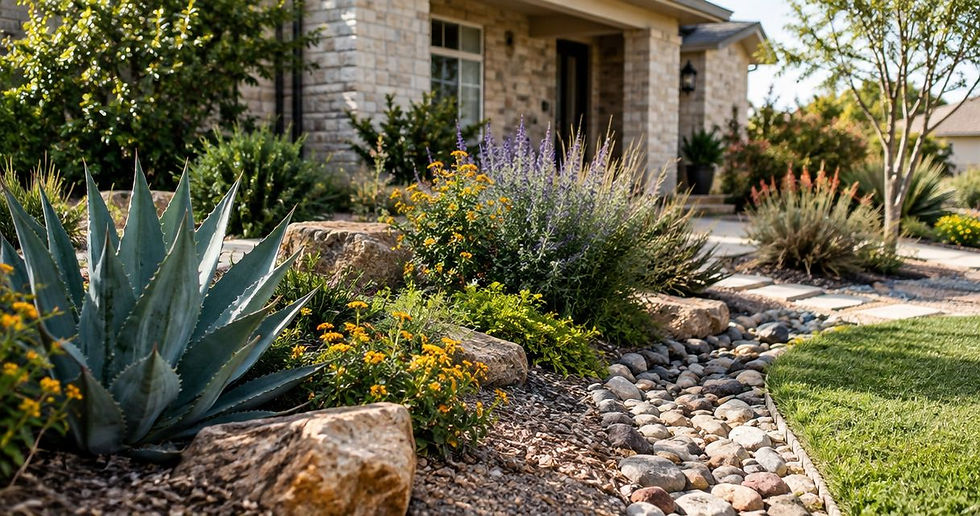
6. Gravel: best mulch for suitable succulent and mineral beds
Gravel is an inorganic surface cover. It does not decompose or feed the soil, and stone absorbs and releases heat. Use it as part of a planting design suited to those conditions—not as a universal replacement for organic mulch.
Gravel pros:
Does not disappear through decomposition.
Fits planting designs built around mineral surfaces.
Provides a distinct boundary between a mineral bed and surrounding areas.
Gravel cons:
Stores heat around plants and adjacent surfaces.
Becomes difficult to remove when mixed into soil or organic debris.
Does not prevent weeds indefinitely; debris can collect between stones.
Best for: Properly drained beds containing plants suited to mineral cover.
Gravel on the surface does not repair poorly drained soil underneath. Before choosing it, confirm the plant selection and bed conditions. The guide to drought-tolerant plants for Frisco yards helps you plan planting choices alongside surface cover.
Verdict: Buy gravel for a deliberate mineral-bed design; skip it as the default for mixed garden beds.
How to install mulch without creating another problem
The best material still needs correct placement. For a 2026 bed refresh, follow this sequence rather than spreading a new layer over everything already there.
Clear weeds
Remove existing weeds before covering the soil. Mulch limits some new growth, but established perennial weeds can grow through it. Keep weed removal separate from the decision about which mulch looks best.
Check drainage
Look for ponding, erosion, or water running across the bed. Correct the underlying problem before covering it. Mulch should protect exposed soil, not conceal drainage trouble.
Measure depth
For coarse organic mulch, a 2–3-inch layer is a practical general target. Measure what remains before topping up, and avoid building a deep layer year after year. Fine materials and delicate plantings need separate judgment.
Leave clearance
Keep mulch off trunks, woody stems, and plant crowns. Leave roughly 6 inches of clearance around tree trunks, adjusting for the tree and planting layout. Near small plants, taper the cover rather than banking it against stems.
Check watering
After installation, check the soil beneath the mulch—not just the surface. Inspect at least 1 inch below the soil surface to see whether watering reaches the bed. Plant needs, rooting depth, and soil conditions still determine the watering plan.
Fix bed conditions before spreading mulch, then check depth and clearance.
Keep mulch within the planting area. It should not cover lawn grass, spill into walks, or hide the base of a tree. A clean edge helps you maintain the separation between bed upkeep and mowing.
What to include in a property-specific quote
Perfectgreendfw is a fit for North Dallas homeowners who want landscape design, installation, and upkeep handled together. Mulch is one part of that work; sod, planting changes, and ongoing lawn care belong in the conversation when your property needs them.
For a useful 2026 quote request, describe:
The area: Identify the front beds, backyard border, or commercial planting areas.
The existing cover: State whether the beds contain bark, leaves, stone, or bare soil.
The problem: Mention weeds, runoff, exposed roots, or material spilling onto pavement.
The broader work: Include landscape installation, sod, property maintenance, or weekly mowing needs.
The desired scope: Ask whether removal, preparation, material placement, and cleanup are included.
Ask Perfectgreendfw for a property-specific quote that separates preparation from installation. Do not compare proposals by material name alone; the same mulch can involve very different work depending on what already occupies the bed.
Request a property-specific landscaping quote
Describe your beds, existing mulch, and any landscape installation, sod, or maintenance needs.
How these mulch types were ranked
Shredded hardwood ranks first because it fits the broadest mixed-bed use in this guide. The other materials receive separate use-case slots based on texture, decomposition, placement, and upkeep. This is a material-selection guide, not a product test or a claim that one mulch suits every Texas property.
Which mulch should you choose?
Choose shredded hardwood for a typical mixed ornamental bed. Choose pine bark or pine straw when their texture suits the planting layout, shredded leaves for regularly worked seasonal beds, and finished compost when soil improvement is the job.
Reserve gravel for a planting design that suits mineral cover. If you are replacing plants, adding sod, or rebuilding beds, settle those decisions before ordering mulch.
FAQ
What's the best mulch for Texas garden beds?
Shredded hardwood is the default recommendation for mixed ornamental beds in this guide. Choose another material when the planting, drainage, or maintenance needs call for it.
Is pine bark better than shredded hardwood?
Pine bark is better suited to shrub borders where you want a coarse texture; shredded hardwood is the general-purpose choice for mixed beds. Loose bark nuggets are a poor fit where runoff moves material.
How deep should mulch be in a Texas garden?
A 2–3-inch layer is a practical general target for coarse organic mulch. Measure the existing layer before adding more, and keep material away from trunks, stems, and crowns.
Can I use leaves as mulch around vegetables?
Yes, clean shredded leaves can cover soil in vegetable gardens. Avoid thick layers of whole leaves, which can mat and interfere with water movement.
Does gravel mulch fix poor drainage?
No, gravel on the surface does not fix poorly drained soil underneath. Address drainage and choose suitable plants before installing a mineral cover.
Is compost enough to stop weeds in a garden bed?
No, finished compost is primarily a soil-improving material, not dependable weed control. Remove existing weeds and choose an appropriate surface cover for the planting.
Can Perfectgreendfw help with mulch and other landscape work?
Perfectgreendfw provides landscape design, installation, sod, lawn care, and property maintenance for North Dallas homeowners and businesses. Request a property-specific quote and describe the bed preparation and ongoing upkeep you need.
One last thing
Faded mulch does not automatically need replacing. Check depth and condition first: topping up a bed that already has enough material can bury plant crowns and create an unnecessarily thick layer. Measure before you order.


Comments