
Best Low Maintenance Landscaping Plants DFW: 2026 Picks
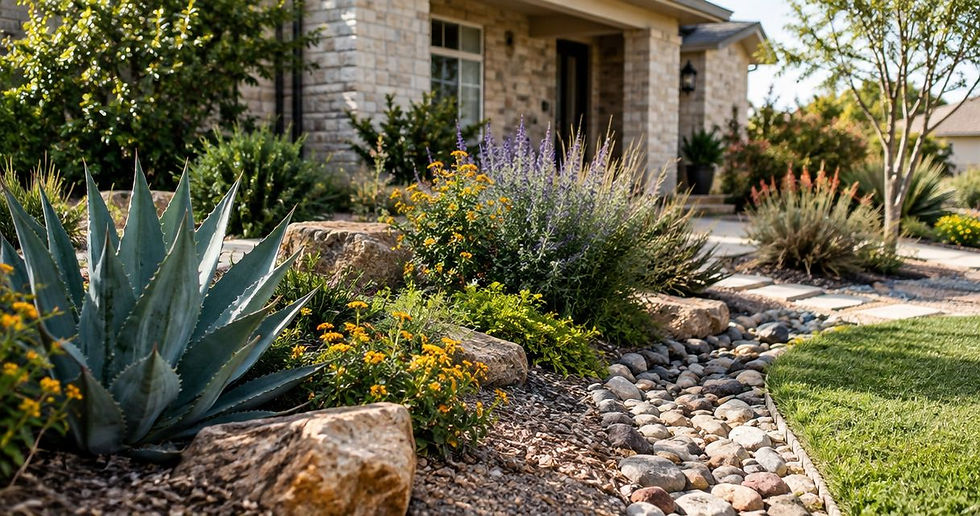
Best overall for a sunny DFW yard in 2026: Texas sage. Best flowering choice for shade: Turk’s cap. Best for fall texture: Gulf muhly. Perfect Green Landscapes handles landscape design, installation and upkeep for North Dallas properties that need more than a plant list.
TL;DR
Texas sage is the best low maintenance landscaping plant for sunny DFW beds with well-drained soil.
Turk’s cap is the flowering pick for a shaded bed; Gulf muhly adds fall texture in sun.
All 6 picks need watering while establishing. Low maintenance does not mean no maintenance.
Perfect Green Landscapes can plan landscape design, installation and ongoing care around the conditions on your property.
Why this matters for North Dallas yards
A plant that tolerates heat can still struggle in a bed that stays wet after rain. Shade creates a different problem: a sun-loving plant can survive there without giving you the dense growth or flowers you wanted. Choose by sunlight and drainage first, then by appearance. That order prevents you from filling a difficult spot with a plant suited to a different yard.
For 2026, the practical goal is a planting plan you can keep up with after installation. Perfect Green Landscapes provides landscape design, installation and property maintenance for homeowners and businesses in the North Dallas suburbs, including Frisco. A property-specific quote should account for the beds you have, the light they receive and the upkeep you want to handle.
What makes the best low-maintenance landscaping plant?
Use these criteria before you compare plants. A low-maintenance choice fits the site and needs less corrective work after it establishes; it does not skip the establishment period.
Light fit: Check the actual bed, not just whether the yard looks sunny. Full sun generally means at least 6 hours of direct sunlight a day.
Drainage fit: Note where water lingers after rain. Plants that prefer well-drained soil are poor picks for a consistently wet pocket.
Mature shape: Leave room for the plant’s natural growth so routine care does not become constant cutting back.
Seasonal work: Decide whether you will clear old stems, trim a shrub or manage self-sown seedlings.
Water during establishment: Even a drought-tolerant plant needs attention while its roots develop. Established tolerance is not an instruction to stop watering a new planting.
A job in the landscape: Pick an evergreen backbone, flowering accent or soft border before choosing a species. One plant should not be expected to do every job.
The 2026 picks at a glance
Plant | Best for | Standout feature | Key limitation |
Texas sage | Sunny, well-drained foundation beds | Silvery evergreen foliage | Poor fit for soil that stays wet |
Dwarf yaupon holly | Low evergreen structure | Dense foliage that takes shaping | Regular shaping defeats the low-work goal |
Autumn sage | Flowers in a smaller sunny bed | Color through much of the growing season | Looks untidy without occasional cutting back |
Gulf muhly | Fall texture along a sunny border | Airy pink fall seed heads | Needs space for its mature clump |
Turk’s cap | Flowers in a shaded bed | Red blooms in partial shade | Can spread beyond a tight planting spot |
Inland sea oats | A natural-looking shaded ground layer | Drooping seed heads and shade tolerance | Self-seeds and needs containment |
The table is a starting point, not a planting plan. A site visit matters most where roof runoff, compacted ground, tree roots or mixed light conditions change how a bed behaves. In 2026, choose the row that matches the specific bed you want to fix, not the plant with the most appealing photo.
Match the plant to the bed before you install it
For a sunny bed with drainage, start with Texas sage, autumn sage or Gulf muhly according to whether you need structure, flowers or texture. For shade, compare Turk’s cap with inland sea oats: one is a flowering accent, while the other gives a looser ground layer. Dwarf yaupon holly fits when the missing piece is an evergreen shape rather than another seasonal flower.
Start with the bed’s light conditions, then decide whether you need structure, flowers or texture.
Check drainage separately from light. Full sun does not make a wet bed suitable for Texas sage, and shade does not mean soil stays moist. Watch the bed after rain before you commit to a plant that needs freely draining ground. If conditions vary across the same property, split the design into planting areas instead of repeating one species everywhere.
1. Texas sage: best low-maintenance plant for sunny foundation beds
Texas sage is a woody evergreen shrub with silvery foliage and purple flowers. It gives a sunny bed year-round structure without needing to be shaped into a formal hedge. For a North Dallas foundation bed, its value is the combination of a defined shrub form and tolerance of dry conditions after establishment.
Drainage is the deciding issue. Texas sage belongs in a spot where water moves through the soil rather than collecting around its roots. Do not choose it simply because the front of the house gets strong afternoon sun; check what happens to that bed after a storm, too.
Texas sage pros:
Evergreen foliage keeps the bed from looking empty between flowering periods.
Silvery leaves contrast with greener shrubs and grasses.
Established plants suit a lower-water planting plan in a well-drained site.
Texas sage cons:
Soil that stays wet is a poor match.
Hard, frequent shearing works against its natural form.
Best for: An open, sunny foundation bed where you want one shrub to provide structure. Leave room for its mature shape rather than planting it where repeated cutting will be necessary. Verdict: Buy for a sunny, well-drained bed; skip it where water lingers.
2. Dwarf yaupon holly: best for low evergreen structure
Dwarf yaupon holly is an evergreen shrub used when a bed needs a low, consistent outline. It can work in sun or partial shade, giving you more placement flexibility than plants that demand an exposed site. It is a structure plant, not the answer if your main goal is a show of flowers.
The word dwarf does not mean no planning is required. Check the mature size of the plant you select and give it room. A shrub squeezed against a walkway or into a narrow strip creates the recurring trimming work a low-maintenance design is supposed to avoid.
Dwarf yaupon holly pros:
Evergreen leaves provide a steady visual edge.
Sun and partial-shade tolerance make it useful across different beds.
Its form can anchor a design that includes looser flowering plants.
Dwarf yaupon holly cons:
It does not replace a flowering accent.
A tightly clipped look requires repeated pruning.
Best for: A homeowner who wants an evergreen line or rounded shrub form without making flowers the priority. Use its natural size to set the spacing in the plan. Verdict: Buy when year-round structure is the job; hold if the bed needs seasonal color instead.
3. Autumn sage: best for flowers in a smaller sunny bed
Autumn sage is a flowering perennial shrub for a sunny location with good drainage. Its blooms bring color to a planting without requiring the bed to be built entirely around annual flowers. It also works as an accent among more permanent shrubs.
Plan for its informal shape. Autumn sage is not a tidy evergreen border that looks the same every month. Old growth needs occasional cutting back, and the plant looks better when it has room to grow rather than being pressed into a rigid line.
Autumn sage pros:
Flowering makes it useful where an all-green bed feels flat.
Its smaller-scale form fits as an accent between structural plants.
It suits a sunny planting plan that does not depend on frequent replacement of seasonal flowers.
Autumn sage cons:
It needs occasional cleanup to stay presentable.
Poor drainage works against it.
Best for: A sunny bed where you want flowers but do not need a formal hedge. Pair its loose form with a plant that supplies steadier structure. Verdict: Buy for a well-drained flowering accent; skip it for a damp or deeply shaded spot.
4. Gulf muhly: best for fall texture along a sunny border
Gulf muhly is a clumping ornamental grass known for airy pink seed heads in fall. Its fine leaves soften the edge of a bed without making the planting look like a row of shrubs. It is a good pick when the design already has structure and needs a lighter layer.
Give each clump enough room to show its shape. Packing grasses too closely removes the airy effect and makes seasonal cleanup harder. Gulf muhly also has a clear seasonal cycle: the fall display is the draw, while older growth still needs attention when the season changes.
Gulf muhly pros:
Fall seed heads add a distinct seasonal feature.
Fine texture contrasts with broad-leaved shrubs.
A clumping habit gives you a defined placement in the bed.
Gulf muhly cons:
It needs seasonal cleanup rather than looking identical all year.
A cramped strip will not show its full form.
Best for: A sunny border that needs movement and fall interest, not a solid screen. Use it as a supporting layer beside more permanent structure. Verdict: Buy where the bed has space for a mature clump; hold if you need a consistently dense edge.
5. Turk’s cap: best flowering choice for a shaded bed
Turk’s cap brings red flowers to partial shade, making it useful where sun-dependent flowering plants underperform. Its growth is loose rather than formal. That makes it a practical choice for a natural-looking bed under trees or beside a shaded part of the house.
Check the available space before planting it. Turk’s cap can spread, so a narrow bed beside a walkway is not its easiest placement. Shade also varies during the day; observe whether the spot gets filtered light or sits in deep shade before deciding what belongs there.
Turk’s cap pros:
Flowers give a shaded planting area a focal point.
Its loose form suits a less formal landscape.
It fills a different role from an evergreen shrub in the same bed.
Turk’s cap cons:
It can spread beyond the space assigned to it.
It is not the plant for a tightly clipped, uniform border.
Best for: A shaded bed with room for a flowering, informal plant. Keep its spread in mind when placing it near paths or smaller plants. Verdict: Buy for a roomy shaded planting; hold for a narrow edge you need to keep sharply defined.
6. Inland sea oats: best for a natural-looking shaded ground layer
Inland sea oats is a shade-tolerant grass with flat, drooping seed heads. It gives a shaded bed movement and coverage without trying to make that space look like a sunny flower border. Where a property has trees and an informal planting style, it can fill the ground-layer role.
The trade-off is self-seeding. Inland sea oats can turn a low-effort planting into a containment job if seedlings are unwelcome outside the bed. Decide where you are comfortable letting it spread before putting it beside a tightly managed border.
Inland sea oats pros:
Shade tolerance makes it useful beneath a tree canopy.
Seed heads provide texture beyond the leaves alone.
Its loose growth fits an informal planting area.
Inland sea oats cons:
Self-sown plants need managing where spread is unwanted.
It is a poor match for a crisp, formal edge.
Best for: A shaded, natural-looking area where some self-seeding is acceptable. Set a boundary for the planting instead of assuming it will stay in one small clump. Verdict: Buy for an informal shaded area; skip it if you do not want to manage seedlings.
How we ranked these DFW landscaping plants
The 2026 order prioritizes fit for a common planting job: sunny structure, evergreen structure, sunny flowers, fall texture, shaded flowers and shaded ground cover. Texas sage leads because it answers the straightforward request for an established, lower-water shrub in a sunny, well-drained bed. That ranking does not make it the right plant for every property.
Each pick has an upkeep cost, even when it needs less routine attention than a poorly matched plant. Compare the limitations in the table with your site before choosing. A plant that needs containment, seasonal cleanup or better drainage is still a good pick when the bed and your maintenance plan can accommodate that work.
Plan installation and upkeep together
For a 2026 planting, mark where the sun falls, identify any wet spots and decide which beds need structure versus flowers. Keep mulch off plant stems; a layer of 2 to 3 inches is a common starting point for a planted bed. Leave space around new plants so you can water and inspect them while they establish.
If you are also changing the lawn, treat sod as a separate decision from the planting beds. Perfect Green Landscapes provides landscape design, installation, sod and ongoing lawn care, so a quote can cover the work you want done across the property. Tell them which areas need planting, which need lawn work and what level of upkeep you want afterward. That is more useful than asking for a quote based only on a list of plant names.
Plan your property-specific quote
Discuss landscape design, installation, sod and upkeep for your North Dallas property.
Which low-maintenance DFW plant should you choose?
Choose Texas sage by default for a sunny bed that drains well. Choose dwarf yaupon holly instead when the main job is a low evergreen outline; choose autumn sage when flowers matter more than a clipped shape. Gulf muhly is the fall-texture pick, not a substitute for a year-round shrub.
For shade, pick Turk’s cap if you want flowers and have room for loose growth. Pick inland sea oats if you want a natural-looking ground layer and can manage self-seeding. If you do not yet know the bed’s light or drainage, wait to plant. Perfect Green Landscapes can address those site conditions as part of a landscape design and installation discussion.
FAQ
What is the best low maintenance landscaping plant for a sunny DFW yard?
Texas sage is the default pick for a sunny, well-drained DFW bed. Check drainage first because its tolerance for dry conditions does not make it suitable for soil that stays wet.
What low-maintenance plant flowers in a shaded North Dallas bed?
Turk’s cap is a flowering choice for a shaded North Dallas bed. Give its informal growth room and keep it out of a narrow space where spreading would create extra work.
Is Texas sage better than dwarf yaupon holly?
Texas sage is better for a sunny, well-drained bed where you want silvery foliage; dwarf yaupon holly is better for a low evergreen outline. The better choice depends on the bed’s light, drainage and intended shape.
Does Gulf muhly stay pink all year?
No, Gulf muhly’s pink seed heads are a fall feature. Choose it for seasonal texture, and use another plant if you need the bed to keep the same appearance year-round.
Will inland sea oats stay in one spot?
Inland sea oats can self-seed beyond its original planting spot. Use it where a loose shaded planting fits the design, and plan to manage unwanted seedlings.
Do drought-tolerant landscape plants need watering after installation?
Yes, newly installed drought-tolerant plants need watering while their roots establish. Their lower-water suitability applies after establishment and still depends on the site.
How do I request a quote for landscaping in Frisco?
Ask Perfect Green Landscapes for a property-specific quote for your Frisco landscape. Identify the beds you want designed or installed, any sod work and the upkeep you want included.
One last thing
The lowest-maintenance plant is often the one you do not force into the wrong bed. In 2026, check that sunny spot after rain before buying Texas sage, and check the shaded border’s available space before choosing Turk’s cap or inland sea oats. Those two checks make the final plant list more useful than adding another pick to it.


Comments