
7 Essential Care Tips for Healthy St. Augustine Grass
Last Updated: October 25, 2026
Quick Summary
St. Augustine grass care requires watering one inch per week during active growth, mowing to 2.5 to 3.5 inches, and applying slow-release nitrogen fertilizer on a schedule matched to local rainfall and temperature. This warm-season grass thrives in partial shade and tolerates wet conditions better than most grasses, but clay soil drainage challenges demand careful irrigation management.
Mow St. Augustine grass to 2.5 to 3.5 inches and never remove more than one-third of the blade in a single mowing
Water one inch per week during active growth months, split into two deep soakings rather than daily light sprinkles
Use a catch-cup test to measure your sprinkler output before assuming your system delivers the target amount
Water between 4 a.m. and 8 a.m. to let blades dry before heat stress and prevent disease
Apply slow-release granular fertilizer with a nitrogen-to-potassium ratio near 2:1, such as 15-5-10 or 16-4-8
Table of Contents
Understanding St. Augustine Grass and Your Local Lawn
St. Augustine grass care starts with knowing what you're growing: this warm-season grass thrives here but has specific needs.
St. Augustinegrass is a tropical grass that spreads through above-ground runners called stolons. It grows actively in warm months and goes dormant when temperatures drop.
The grass performs well in our clay-heavy soil, but that same soil creates drainage challenges: heavy rain sits on the surface for days, inviting disease and weakening roots.

What makes St. Augustinegrass different from Bermuda or Zoysia:
Prefers partial shade to full sun
Tolerates wet conditions better than most warm-season grasses
Grows coarser blades than fine fescue
Needs more nitrogen than cool-season grasses
Dies back completely in winter
Clay holds moisture, sand drains too fast, and most North Texas yards aren't naturally in between, which is why drainage is critical.
St. Augustine Grass Watering Schedule for Warm Months
Overwatering is the leading cause of St. Augustine grass problems. The standard advice, one inch per week, is correct, but useless unless you verify what your sprinklers actually deliver.
The target is one inch per week during active growth months, including rainfall. Smart sprinkler systems can automate this schedule while accounting for rainfall and local water restrictions. If you get a half-inch of rain on Tuesday, you only need another half-inch from irrigation that week.
How to Measure Your Sprinkler Output
The catch-cup test shows how long your system must run to apply one inch.
Scatter six to eight straight-sided cans (tuna cans work well) across a zone, some near the sprinkler head, some at the edges.
Run the zone for 15 minutes.
Measure the depth of water in each can with a ruler.
Average the depths. Multiply by four to estimate the application rate per hour.
If the average is 0.25 inch in 15 minutes, your system applies about one inch per hour, so a one-inch weekly target means running that zone for about 60 minutes. If the average is 0.1 inch, you need closer to 150 minutes. Most homeowners discover their system applies far less than assumed, or that coverage is uneven.
Check for Coverage Gaps
Low cans at the edges signal poor coverage. St. Augustine grass in those dry spots will thin and invite weeds. Adjust or replace heads, or run the zone in two shorter cycles to improve infiltration on clay soil.
Adjust for Rainfall and Season
Spring (March-May): Start at about 0.75 inch per week and increase as growth accelerates.
Summer (June-August): One inch per week, split into two deep soakings (for example, Tuesday and Friday) rather than daily light sprinkles.
Fall (September-October): Reduce to 0.5-0.75 inch per week as growth slows.
Winter dormancy: Water only every two to three weeks if there is no rain, just enough to keep roots alive.
Pro Tip A simple soil-moisture check: push a screwdriver into the soil. If it slides in easily, the soil is moist enough. If it resists, water is needed. Check several spots, not just one.
Watering Timing and Disease Prevention
Water between 4 a.m. and 8 a.m. Morning watering lets blades dry before heat stress; evening watering leaves blades wet overnight, ideal for brown patch and gray leaf spot.
Water deeply but less frequently: a shallow daily sprinkle creates weak surface roots, while deep watering once or twice weekly pushes roots down to moisture.
Troubleshooting Common Irrigation Problems
Runoff on clay soil: If water pools or runs off after 10-15 minutes, split the cycle into two shorter runs 30-60 minutes apart (cycle-and-soak). This lets the clay absorb water instead of shedding it.
Dry spots despite irrigation: Check for clogged or tilted heads, and confirm that spray patterns overlap. St. Augustine grass in shade needs less water, but dry shade often signals tree-root competition rather than a sprinkler problem.
Standing water: Poor drainage, not underwatering, is usually the cause. Aerate, add organic matter, or regrade. Standing water invites disease and weakens roots.
weather alerts lawn fertilization schedule can help you track rainfall and adjust your irrigation timing. This removes guesswork from the equation.
Best Mowing Height for St. Augustine Grass
Mowing height affects disease resistance, drought tolerance, weed pressure, and appearance, get it wrong and you fight problems all season.
The Lawn Care Nut
The best mowing height for St. Augustinegrass is 2.5 to 3.5 inches. Taller grass shades the soil to block weed germination and develops stronger roots; shorter grass looks tidier but becomes weaker.
Never remove more than one-third of the blade in a single mowing. If grass reaches four inches, cut to three; at five inches, cut to three and a half. Cutting more stresses the plant and can trigger disease.
Mow when the grass is dry, wet grass clumps, clogs the mower, and bruises easily, creating disease entry points. Mow mid-morning after dew dries but before afternoon heat peaks.
During peak growth (May through September), mow weekly; during slower periods, every 10 days works, consistently holding that 2.5- to 3.5-inch range.
Mowing height by season:
Spring (March-May): 3 to 3.5 inches
Summer (June-August): 3 to 3.5 inches
Fall (September-October): 2.5 to 3 inches
Winter dormant period: raise height to 3.5 inches before dormancy sets in
St. Augustine grass performs best when mowed to specific heights depending on the season.
Season | Mowing Height | Frequency |
Spring (March-May) | 3 to 3.5 inches | Weekly |
Summer (June-August) | 3 to 3.5 inches | Weekly |
Fall (September-October) | 2.5 to 3 inches | Every 10 days |
Winter dormant period | 3.5 inches | As needed before dormancy |
When to Fertilize St. Augustine Grass and What to Apply
Timing and type matter equally. Weather alerts and rainfall tracking help you schedule applications based on local conditions rather than a fixed calendar. St. Augustinegrass needs nitrogen most, potassium second, and phosphorus last. The bag label is where most homeowners get lost.
Reading the Fertilizer Label
Slow-release nitrogen appears as sulfur-coated urea, polymer-coated urea, or IBDU, often with a stated percentage (for example, "50% slow-release nitrogen"). A higher fraction means a longer, safer feeding window.
Product Types and Active Ingredients
Granular slow-release fertilizer: The most common choice for St. Augustine. Look for a product with a nitrogen-to-potassium ratio near 2:1 (for example, 15-5-10 or 16-4-8). Apply with a spreader and water in lightly.
Organic fertilizers: Composted poultry litter, feather meal, and alfalfa meal release nitrogen slowly and improve soil. They are lower-analysis, so you apply more product by weight, but they are less likely to burn grass.
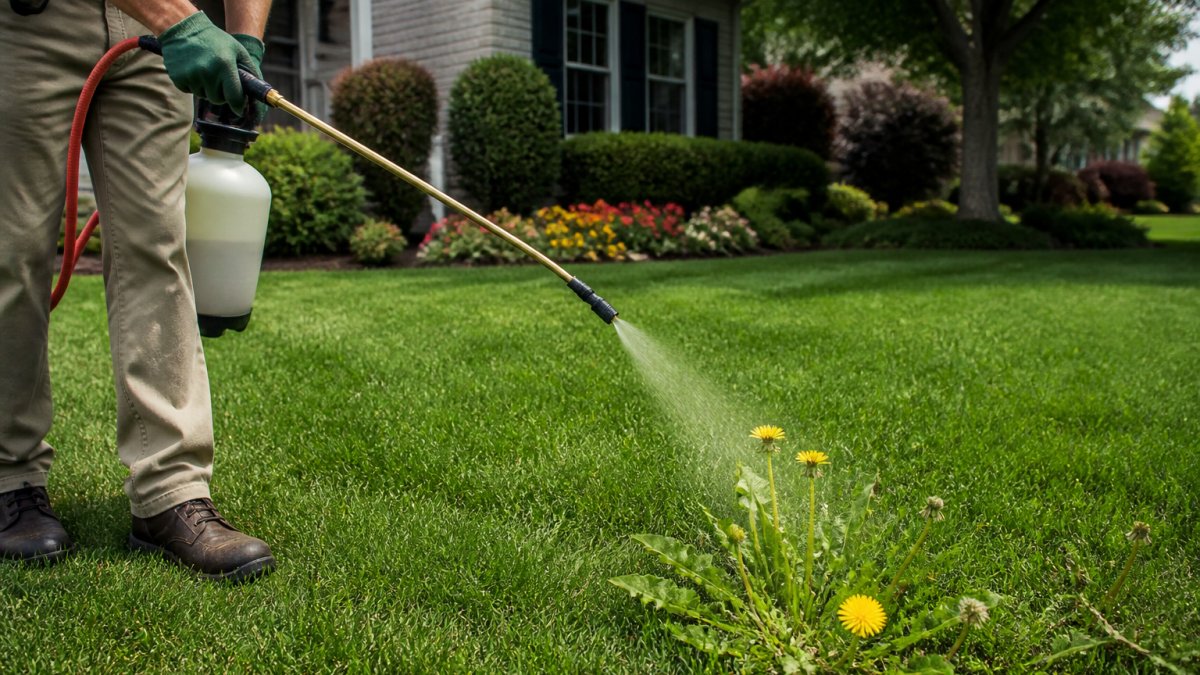
Weed-and-feed products: These combine fertilizer with a herbicide such as 2,4-D or atrazine. Use caution, many broadleaf herbicides labeled for other grasses can damage St. Augustine, especially in heat. Apply only when temperatures are below 85°F and the grass is actively growing.
Iron supplements: St. Augustine often shows yellowing (chlorosis) from iron deficiency, especially on high-pH clay soil. Chelated iron products correct this without pushing excessive growth.
Watch Out Never apply a fertilizer containing a pre-emergent herbicide (such as prodiamine or dithiopyr) at the same time you are trying to overseed or repair bare spots, the pre-emergent will prevent the new grass from establishing. Also avoid applying weed-and-feed during the spring green-up; wait until the grass is fully active.
Application Rates and Timing
weather alerts lawn fertilization schedule texas helps you time applications to local conditions and rainfall patterns.
Pet and Child Safety
Keep pets and children off the lawn until granules have dissolved and grass has dried, typically 24-48 hours. Organic products are safer for immediate re-entry but can attract animals. Weed-and-feed products carry herbicide warnings; follow the label's re-entry interval exactly. Store all products out of reach and never transfer them into unlabeled containers.
Key Takeaway Match the product to the job: slow-release granular for routine feeding, chelated iron for yellowing, and targeted herbicide only when weeds are confirmed and temperatures are mild. Read the label every time, formulations change.
Preventing and Treating St. Augustine Grass Brown Patch
The brown patch ring is the margin where the disease is actively spreading; the center often recovers once conditions dry out. Address drainage and moisture first, then consider fungicide if the problem spreads.
Weed Control and Pest Management for a Dense Lawn
North Texas Weed Control Cost provides a quote for professional weed and pest management services tailored to your property.
Getting Professional Help with Your St. Augustine Lawn
How Much Does Commercial Landscaping Cost in Dallas TX 2026 explains pricing for professional landscape services and helps you understand what's included in different service packages.
Perfect Green Landscapes handles weekly mowing and provides comprehensive lawn care and landscaping services.
Frequently Asked Questions
How often should I water St. Augustine grass?
St. Augustine grass typically needs about one inch of water per week, applied in one or two sessions. Water early in the morning to reduce disease risk. During hot summer months, you may need to water twice weekly if rainfall is insufficient. In cooler months or during rainy periods, reduce frequency to avoid overwatering, which promotes fungal issues like brown patch.
How high should you mow St. Augustine grass?
Keep St. Augustine grass between 2.5 and 4 inches tall, with 3.5 inches being ideal for most situations. Mowing at this height shades the soil, reduces weed germination, and helps the grass compete against weeds naturally. Never remove more than one-third of the blade in a single mowing, as this stresses the plant and can invite disease.
When should you fertilize St. Augustine grass?
Apply slow-release nitrogen fertilizer in late spring after the grass fully greens up, then again in midsummer if needed. A third application in early fall helps the grass prepare for dormancy. Avoid heavy nitrogen applications in winter when the grass is dormant. Use a balanced fertilizer with adequate potassium to strengthen the plant against stress and disease.
What causes brown patch on St. Augustine grass, and how do I treat it?
Brown patch, a fungal disease, thrives in warm, humid conditions, especially with poor drainage and excessive nitrogen. Prevent it by improving drainage, reducing evening watering, and maintaining proper mowing height. If brown patch appears, apply a fungicide labeled for turfgrass diseases, improve air circulation, and avoid high-nitrogen fertilizers during peak disease season. Ensure your lawn drains well, particularly in clay soil common to North Texas.
St. Augustine grass thrives when you match your care to its specific needs. Proper watering, mowing height, fertilizer timing, and disease prevention create the conditions for dense, healthy growth. But consistency matters more than any single decision. Professional lawn care removes the guesswork and ensures your lawn gets what it needs, when it needs it. Get started with Perfect Green Landscapes and transform your lawn into the healthy, vibrant outdoor space your property deserves.

Comments